
3
A
B
C
D
E
F
I
L
M
N
O
P
Q
S
T
U
V
X
______ END ______
| MBE Maturity Index - MBE Lexicon | Reference | 2022 |
This document contains the results from the MBIT, MBE Committee’s MBE Maturity Index task group.
The information conveyed in this document has been normalized to help progress the maturation of Model-Based Enterprise (MBE) for digital product realization.
Comments, suggestions, or questions on this document should be addressed to Curtis Brown, cbrown@kcnsc.doe.gov
Distribution Statement:
This document is: is an updated Rev B to NSC-614-4279 dated January/2022 Unclassified Unlimited Release (UUR).
This version is a working release and has been made available as a rubric tool.
Furthermore we continue to solicit peer review and appreciate any focus area validation and improvement requests via the Peer Comments worksheet.
| Term: 3D CAD Model |  |
| Definition: 3D Model of a physical item that is generated using drafting and design software. |
| Term: 3D Interactive Viewable | 3DIV |
|
| Definition: A three-dimensional derivative model that is interactive and is published in a ubiquitous format. | 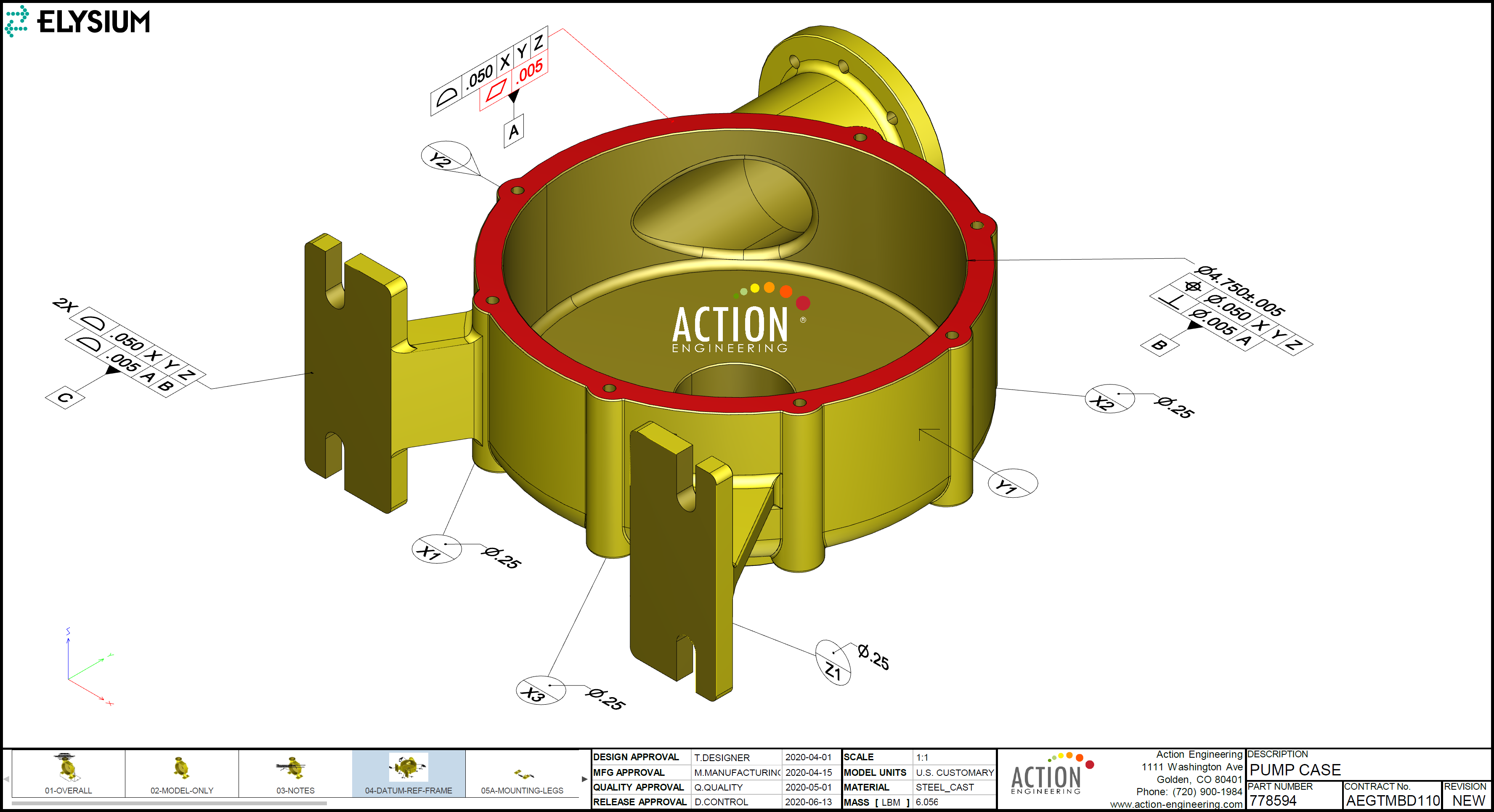 |
| Term: 3D Model | |
| Definition: A three-dimensional spatial model. |
| Term: Annotation | |
| Definition: Visible dimensions, tolerances, notes, text, or symbols. | 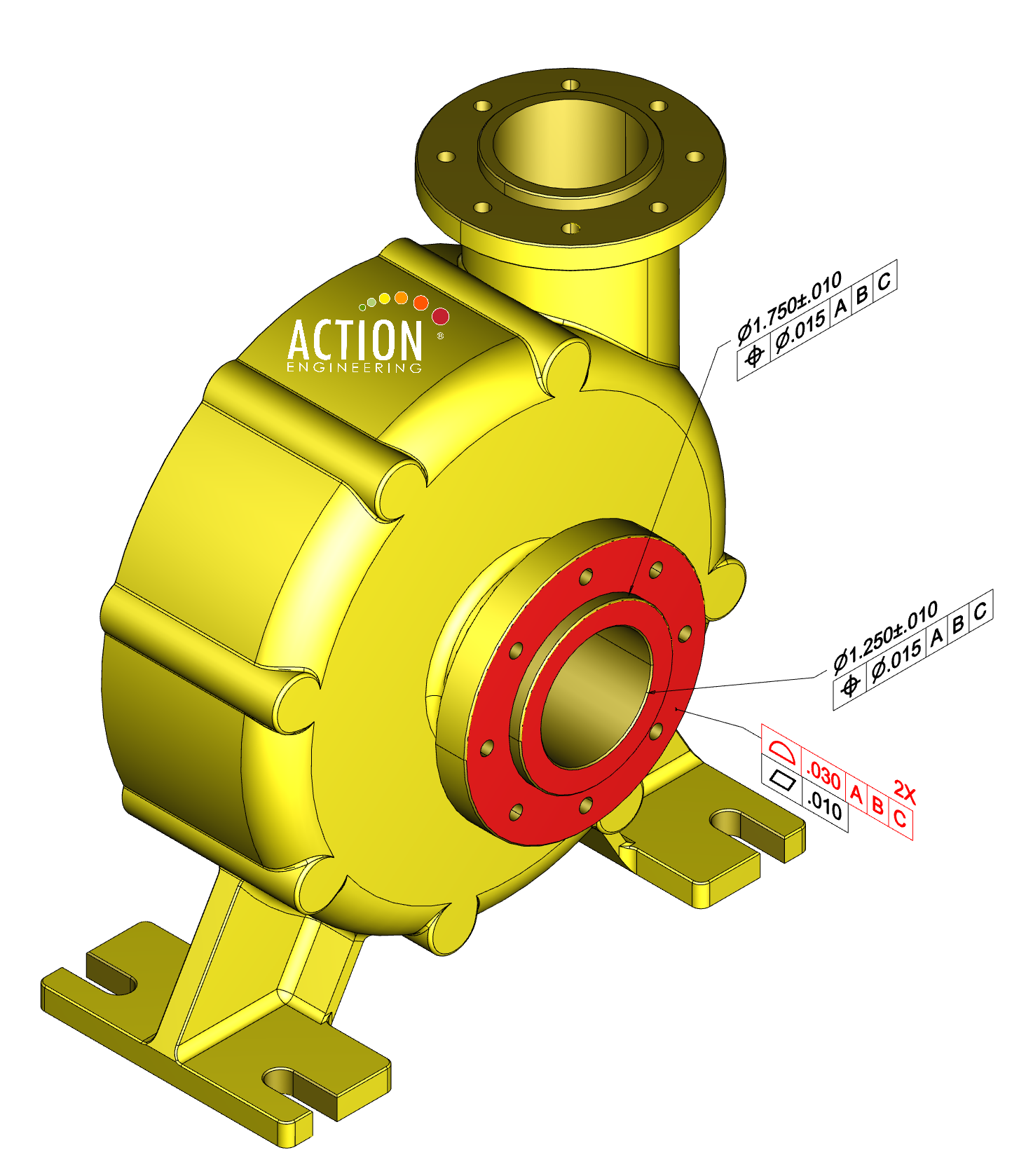 |
| Term: Attribute | |
| Definition: A dimension, tolerance, note, text, or symbol required to complete the product definition or feature of the product that is not visible but available upon interrogation of the annotated model. | 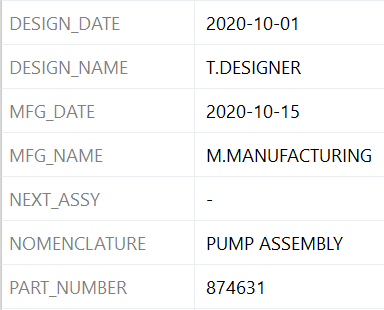 |
| Term: Authenticated | |
| Definition: Proven to be genuine as issued by its originator. |
| Term: Authoritative Source | |
| Definition: An information provider that is sanctioned for a given lifecycle activity. |
| Term: Authorized | |
| Definition: Approved by an authority for use in a lifecycle activity. |
| Term: Authorized Model | |
| Definition: A digital representation of a thing approved by an authority for use in a lifecycle activity. |
| Term: Automated | |
| Definition: A mode of operation performed for a person by a machine. |
| Term: Basis Model | |
| Definition: The model that a practitioner uses as the starting point for a given lifecycle activity. |
| Term: Bill of Characteristics | BoC |
|
| Definition: a list of all the characteristics applied to a product. |
| Term: Bill of Materials | BOM |
|
| Definition: A list of items, along with quantities and optional activity-specific information, needed to perform a particular lifecycle activity. |
| Term: BoM, X | |
| Definition: Any type of BoM. |
| Term: Certified | |
| Definition: Guaranteed to conform to protocols. |
| Term: Courtesy Model | |
| Definition: An unauthorized artifact (e.g., model) provided to a recipient. |
| Term: Critical Note | |
| Definition: A note of great importance that appears on a 3D model. |
| Term: Criticality Designator | |
| Definition: A note of great importance that appears on a product definition. |
| Term: Customer Requirement | |
| Definition: A requirement that address a customer's expectations for the functionality, performance, and quality of a product being developed. |
| Term: Data | |
| Definition: Information represented in a formal manner suitable for communication, interpretation, or processing by human beings or computers. |
| Term: Data Package | DP |
|
| Definition: A collection of 3D model geometry, annotations, attributes, and presentation states that includes a lightweight viewable file format that is intended for human readability. It may also contain derivate data and associated lists. | 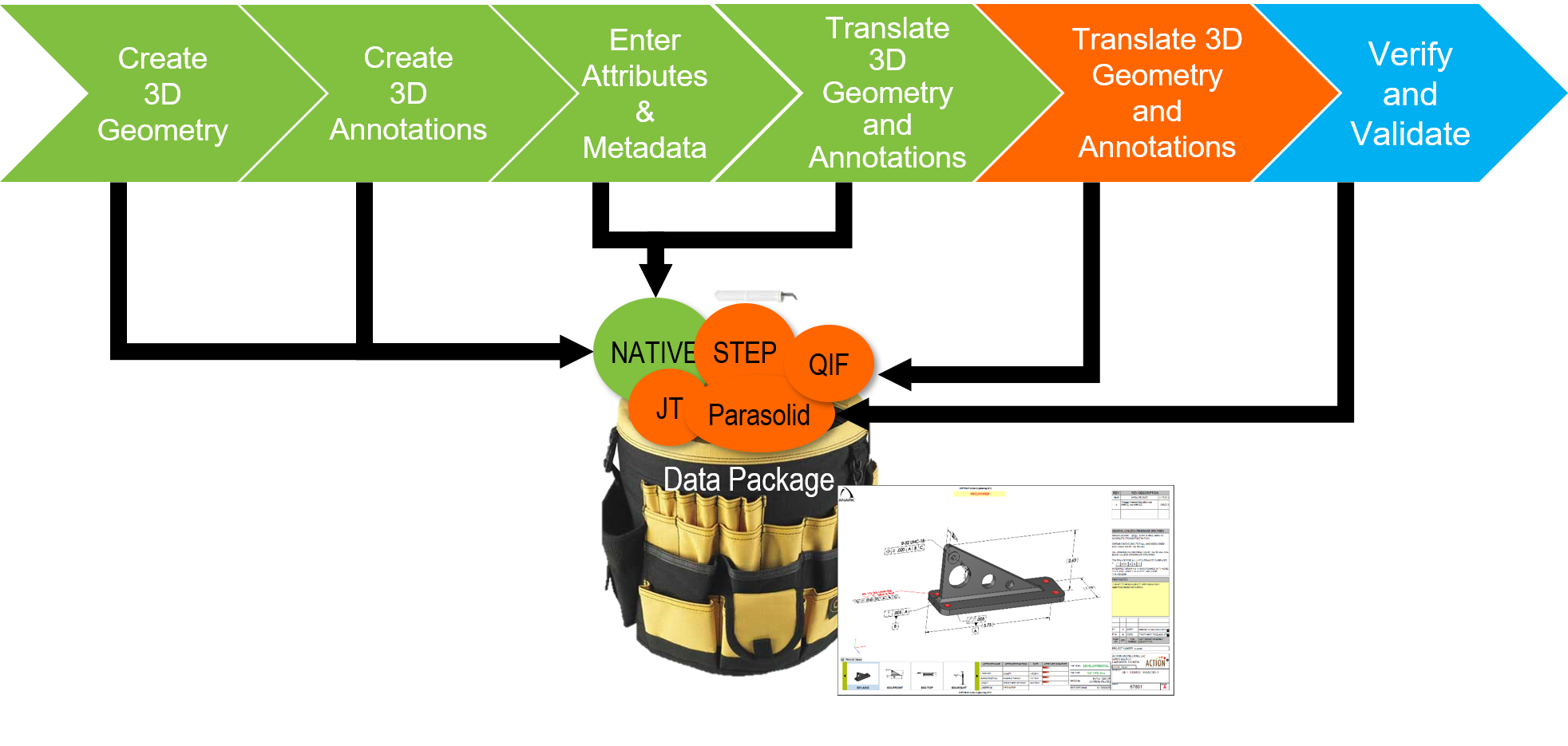 |
| Term: Dataset | |
| Definition: An identifiable collection of related data that serves a lifecycle activity. |
| Term: Derivative | |
| Definition: Data duplicated or extracted from the original. A copy of a derivative is also a derivative. |
| Term: Derivative Model | |
| Definition: A model created from a source model that may be transformed into a different format. |
| Term: Design Activities | |
| Definition: Activities involved in designing a product. |
| Term: Design for X | DFX |
|
| Definition: An activity that optimizes a design for a goal. |
| Term: Digital | |
| Definition: Data intended for interpretation by computer applications. |
| Term: Digital Enterprise | |
| Definition: An organization that uses a digital thread to conduct business activities. |
| Term: Digital Thread | |
| Definition: A communication framework that connects data flows, which can be used to produce an integrated and holistic view of an asset’s data from physical and virtual systems (i.e., its Digital Twin) throughout its lifecycle across traditionally siloed functional perspectives. |
| Term: Digital Twin | |
| Definition: A digital twin is an integrated data-driven virtual representation of real-world entities and processes, with synchronized interaction at a specified frequency and fidelity. |
| Term: Direct Modeling | |
| Definition: A modeling method that allows designers to interact directly with the geometry of the model. |
| Term: Electronic | |
| Definition: A computerized document intended for presentation to humans. |
| Term: Embellished Derivative | |
| Definition: The condition of a derivative being embellished from its source with respect to an intended use. |
| Term: Enterprise | |
| Definition: A supra-organization that participates in an endeavor. |
| Definition: Activities that enable an organization to act as a MBE, but do not directly add value to a product. |
| Term: Final-Process Model | |
| Definition: The final process model for a process definition. |
| Term: In-Process Model | |
| Definition: The intermediate process model(s) with a process definition. |
| Term: Inheritance Model | |
| Definition: A derivative model with one-way associative propagation of source model changes. |
| Term: Inspection Requirement | |
| Definition: A tolerance or specification applied to a part feature or product that requires verification. |
| Term: Interactive | |
| Definition: A mode of operation performed by a person interacting with automation. |
| Term: Lifecycle Activity | |
| Definition: An activity related to a product lifecycle. | 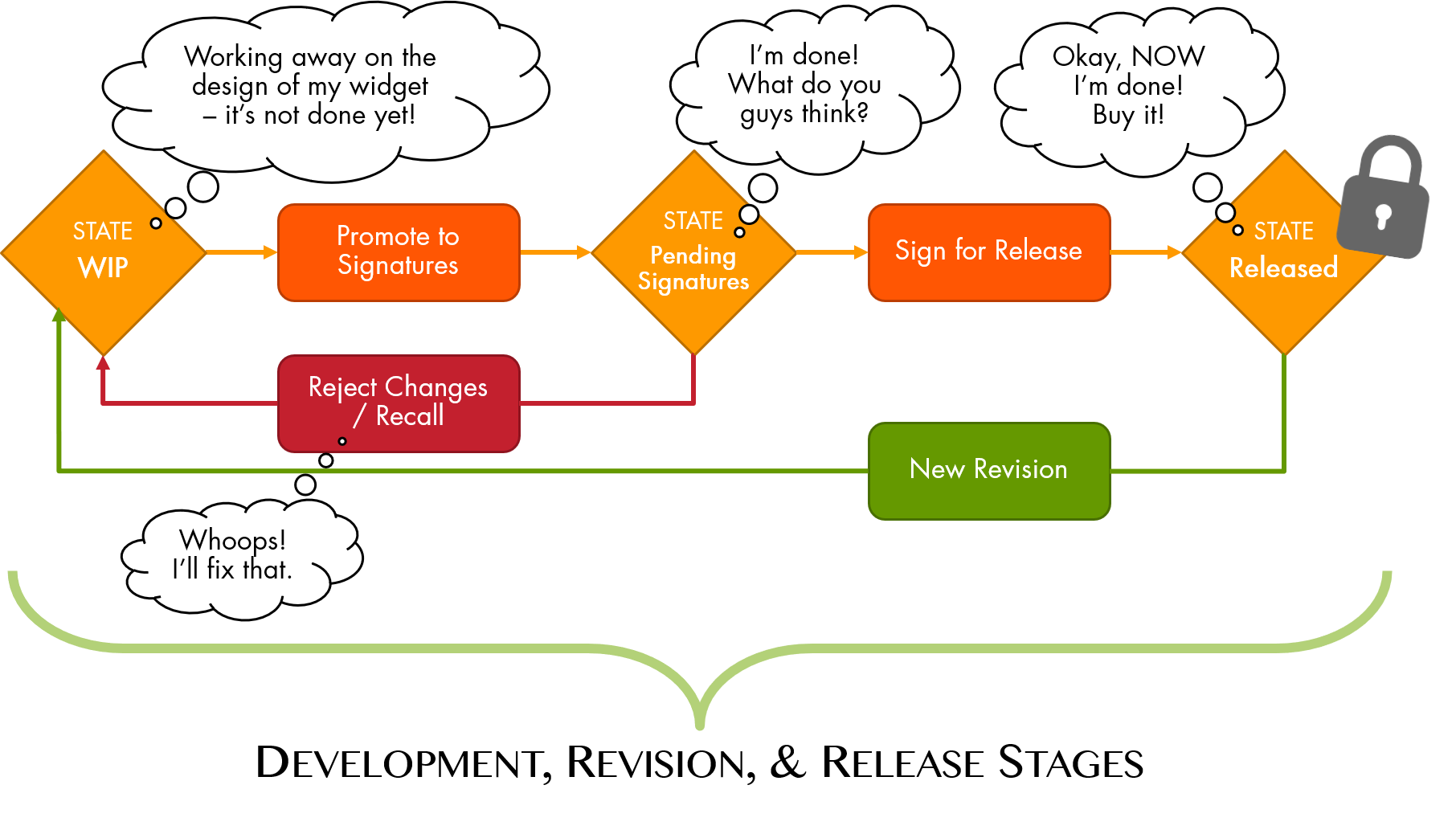 |
| Term: Long Term Archiving and Retrieval | LOTAR |
|
| Definition: A capability that preserves information and makes it available for communities of interest. |
| Term: MBD Dataset | |
| Definition: A product definition dataset that includes a model-based definition. |
| Term: MBE Maturity Index | |
| Definition: A tool that an organization uses to assess itself as, and facilitate transition to, a model-based enterprise. |
| Term: Manual | |
| Definition: A mode of operation performed by a person without automation. |
| Term: Manufacturing Activities | |
| Definition: Activities involved in making a product. |
| Term: Maturity Level | |
| Definition: In the MBE Maturity Index, a state of maturity that contains a set of assertions. |
| Term: Model | |
| Definition: The portion of the data set that contains model geometry and supplemental geometry. | 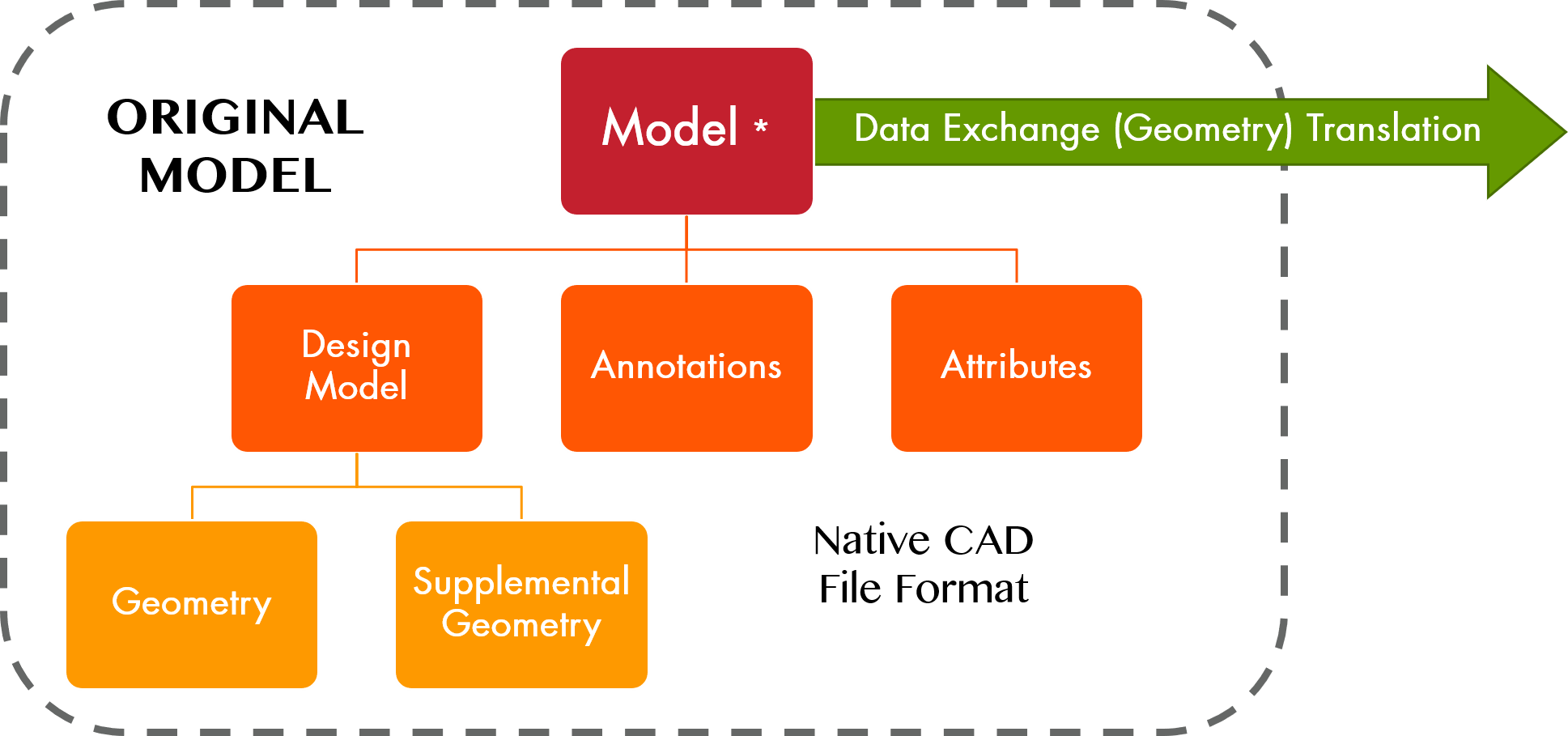 |
| Term: Model-Based Definition | MBD |
|
| Definition: An annotated model and its associated data that define the product in a manner that can be used effectively without a drawing graphic sheet. |
| Term: Model-Based Enterprise | MBE |
|
| Definition: An organization that uses digital methodologies as the foundation to enable deployment of products from concept to disposal. |
| Term: Model-Based Systems Engineering | MBSE |
|
| Definition: Systems Engineering is a transdisciplinary and integrative approach to enable the successful realization, use, and retirement of engineered systems, using systems principles and concepts, and scientific, technological, and management methods. |
| Term: Native Model | |
| Definition: A model in the format of its originating software application (e.g., Creo). |
| Term: Organizational Change Management | OCM |
|
| Definition: The mechanisms that integrates change and the ability to adapt change within an organization. |
| Term: PDM System | Product Data Management System |
|
| Definition: An information system that implements product data management. |
| Term: Parametric Modeling | |
| Definition: A modeling process with the ability to change the shape of model geometry as soon as the dimension value is modified. |
| Term: Part | |
| Definition: One item, or two or more items joined together, that is not normally subject to disassembly without destruction or impairment of designed use (e.g., transistor, composition resistor, screw, transformer, and gear). | 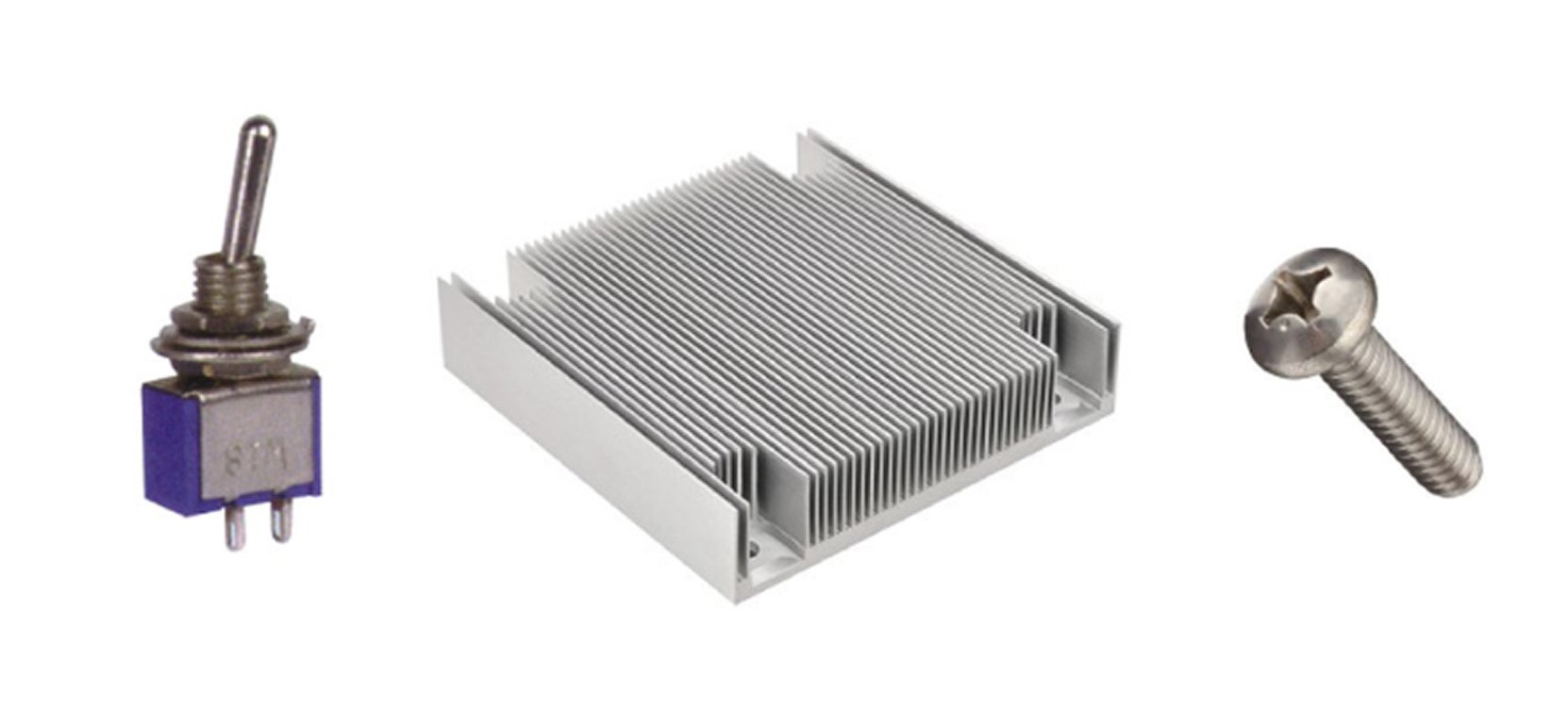 |
| Term: Part-Centric | |
| Definition: An organizing principle that enables product data management to relate all product lifecycle data to a single point of reference. |
| Term: Pedigree | |
| Definition: The record of heritage that proves the veracity of a data item. |
| Term: Precise | |
| Definition: Describes a result that has sufficient decision precision. |
| Term: Process | |
| Definition: Activity that contributes to realizing a product. |
| Term: Process Data | |
| Definition: Product data that pertains to a process. |
| Term: Process Definition | |
| Definition: Any information that defines a process that contributes to realizing a product. |
| Definition: A dataset that contains process definition. |
| Definition: A system model that encapsulates a process definition. |
| Term: Product | |
| Definition: Includes materials, parts, components, subassemblies, assemblies, and equipment. The term product shall also encompass a family of products. |
| Term: Product Characteristic | PC |
|
| Definition: A tolerance or specification applied to a feature or product that requires verification. A characteristic has a local designation identifier(s) and may have a criticality associated with it. |
| Term: Product Data | |
| Definition: A representation of information about a product in a formal manner suitable for communication, interpretation, or processing by human beings or by computers. |
| Term: Product Data Management | PDM |
|
| Definition: A system that manages as-designed data and is the authoritative source for the geometry, attributes, CAD BOM, and revision. | 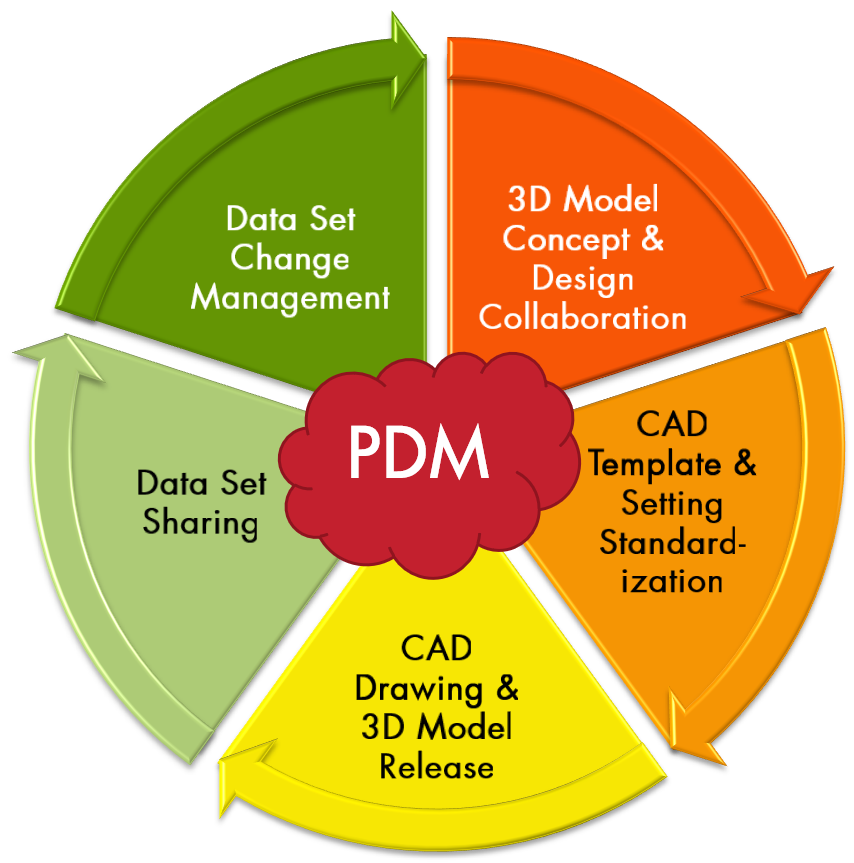 |
| Term: Product Data Management Activities | PDM Activities |
|
| Definition: Activities that interrelate product data. |
| Term: Product Definition | PD |
|
| Definition: Any information that defines the physical or functional requirements of a product, to ensure design intent. |
| Definition: An information system that stores record copies (44 U.S.C.3301) of product definition for their long-term archive and retrieval. |
| Definition: The record of transmittal and supporting procedures that authorize product definition for a lifecycle activity. |
| Term: Product Definition Data Set | PDDS |
|
| Definition: A collection of one or more data file(s) that discloses, directly or by reference, by means of presentation (e.g., graphic or textual), representation (e.g., semantics or machine readable), or a combination of both, the physical or functional requirements of an item. |
| Term: Product Definition Set | |
| Definition: An identified set of product definition that fully defines a product. |
| Definition: A system model that encapsulates a product definition. |
| Term: Product Lifecycle | |
| Definition: The series of stages through which a product passes during its lifetime. |
| Term: Product Lifecycle Data | |
| Definition: Data that pertains to the product lifecycle. |
| Term: Product Lifecycle Management | PLM |
|
| Definition: A system that manages as-built design information and is the authoritative source for the eBOM, changes, data package, design deviations, and usage. | 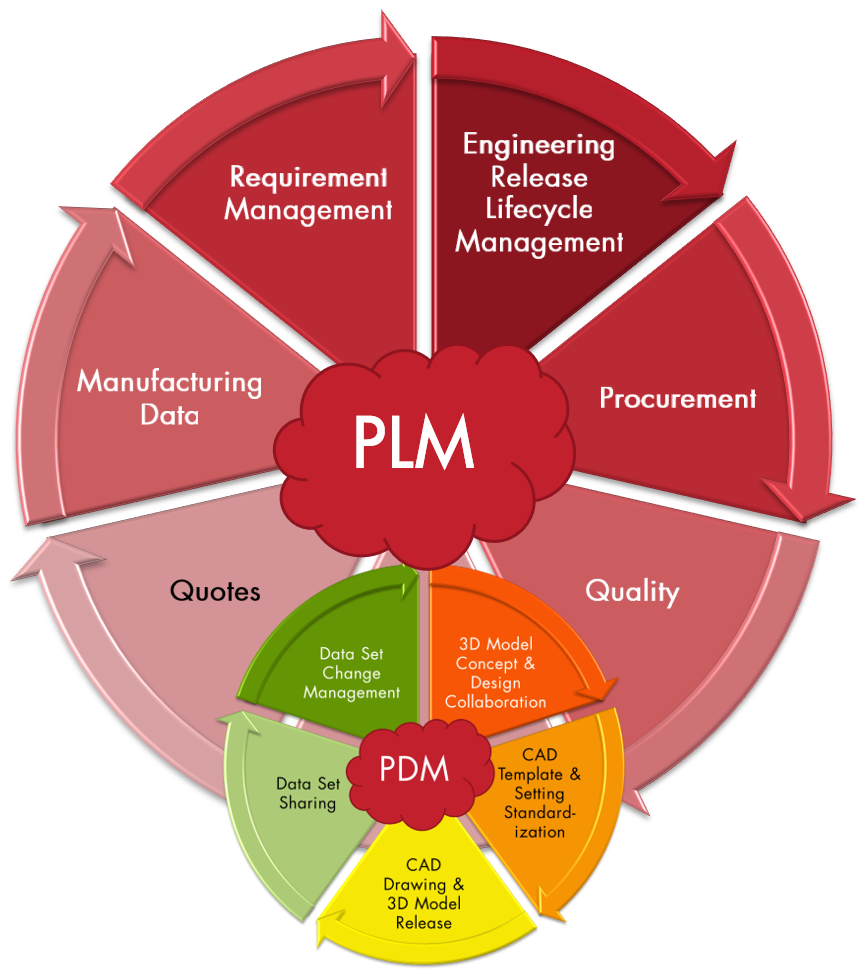 |
| Term: Product Requirement | |
| Definition: A requirement that address a product’s purpose, its features, functionalities, and behavior. |
| Term: Product Structure | |
| Definition: A hierarchical list of items that constitute a product. |
| Term: Product and Manufacturing Information | PMI |
|
| Definition: 3D annotations (dimensions and tolerances), metadata, notes and attributes needed to define the product beyond the 3D geometry. |
| Term: Quality Activities | |
| Definition: Activities involved in manufacturing verification, testing, inspection, and product acceptance. |
| Term: Quality Information Framework | QIF |
|
| Definition: An ANSI/DMSC standard for computer-interpretable quality information. |
| Term: Semantic PMI | |
| Definition: PMI that associates to digital elements. |
| Term: Service Activities | |
| Definition: Activity involved in servicing products. |
| Term: Source | |
| Definition: An artifact that is transformed into a derivative. |
| Term: Source Model | |
| Definition: The model from which a derivative is obtained. |
| Term: Source of Truth | |
| Definition: The single authoritative source that contains the original information item. |
| Term: Spatial Model | |
| Definition: A model that represents geometric and/or spatial relationships. |
| Term: Start-Process Model | |
| Definition: The initial process model for a process definition. |
| Term: Supplemental Dataset | |
| Definition: Data elements included in product definition data to communicate design requirements but not intended to represent an item. |
| Term: Support | |
| Definition: Structure separate from the part geometry that is created in order to provide a base and anchor for the part during the building process. |
| Term: Support Model | |
| Definition: A digital representation of a thing provided as complementary to a primary artifact. |
| Term: System | |
| Definition: A composite of equipment, skills, and techniques capable of performing or supporting an operational role or both. A complete system includes all equipment, related facilities, material, software, services, and personnel required for its operation and support to the degree that it can be considered a self- sufficient unit in its intended operational environment. |
| Term: System Model | |
| Definition: A logical model of interconnected structures, behaviors, parametrics, and requirements of a system. |
| Definition: Activities for system engineering of systems. |
| Term: Technical Data Package | TDP |
|
| Definition: The authoritative technical description of an item. This technical description supports the acquisition, production, inspection, engineering, and logistics support of the item. | 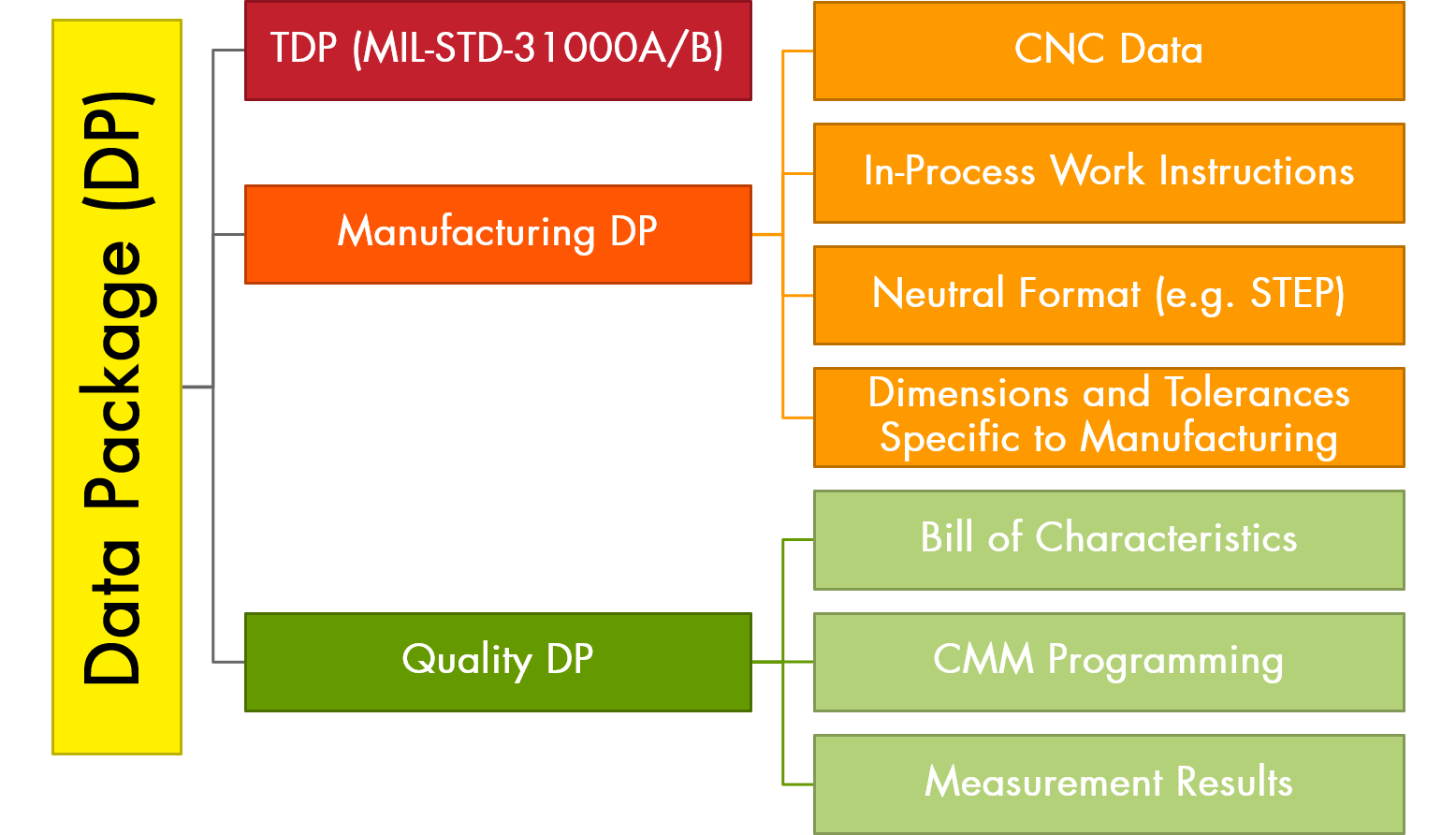 |
| Term: Traceability | |
| Definition: The ability to traverse the digital thread. |
| Term: Trusted | |
| Definition: Regarded with confidence by a consumer, and concurrently being certified, authorized, and authenticated. | 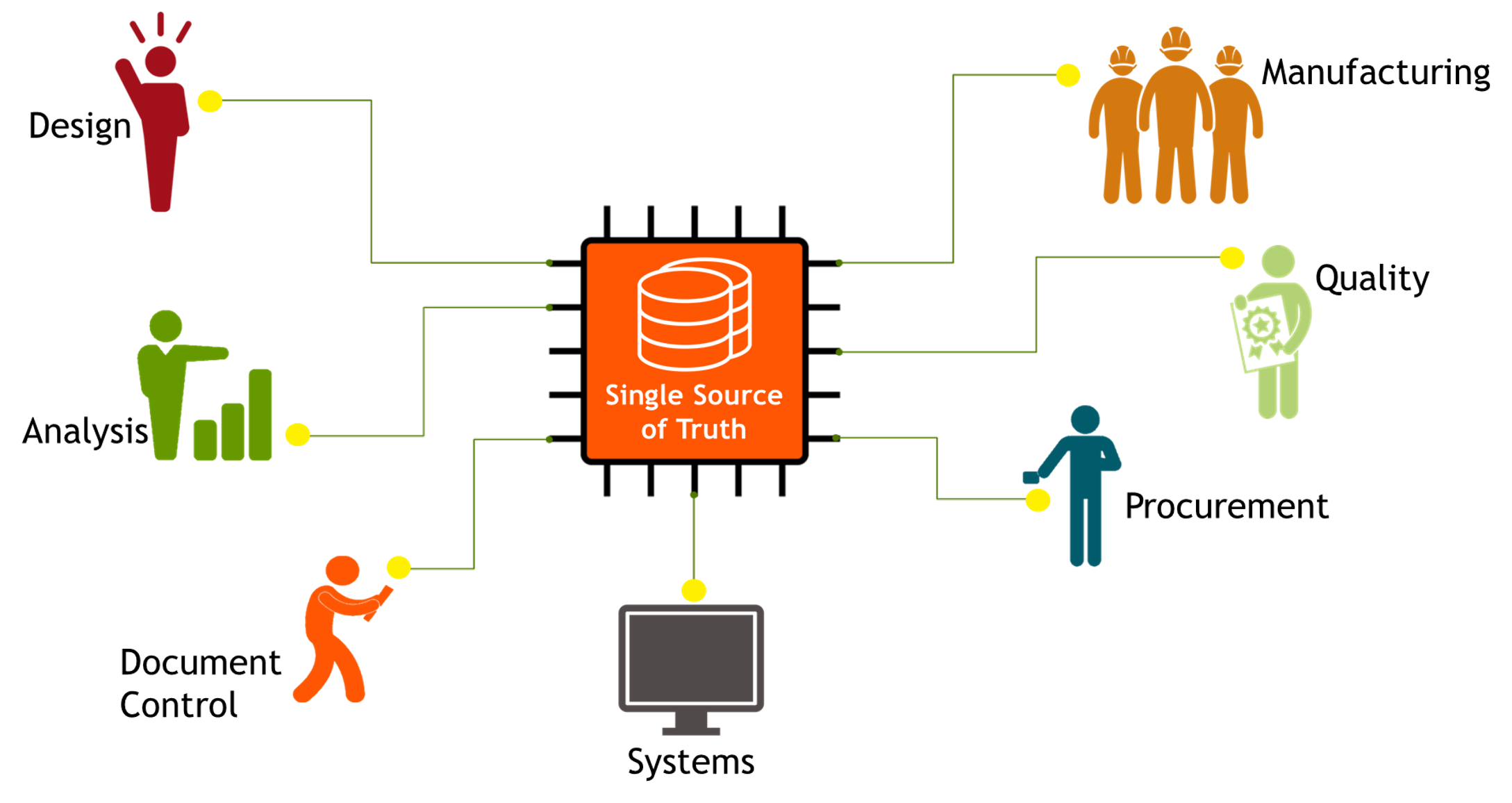 |
| Term: Trusted Data | |
| Definition: Facts given for storage or processing that are regarded with confidence by a consumer, and concurrently being certified, authorized, and authenticated. |
| Term: Unambiguous | |
| Definition: Resolves to the intended interpretation. |
| Term: Validated | |
| Definition: Assured to satisfy intent. |
| Term: Validation | |
| Definition: An activity that assures that a product satisfies intent. |
| Term: Verification | |
| Definition: An activity that assures that a product satisfies requirements. |
| Term: Verified | |
| Definition: Assured to satisfy requirements. |
| Term: xBOM | |
| Definition: A type of BOM used for a given lifecycle activity. |
| Term: xModel | |
| Definition: A model used for a given lifecycle activity. |